

Thank you to everyone who supported the production of the Babylon Songs limited edition, handmade book!
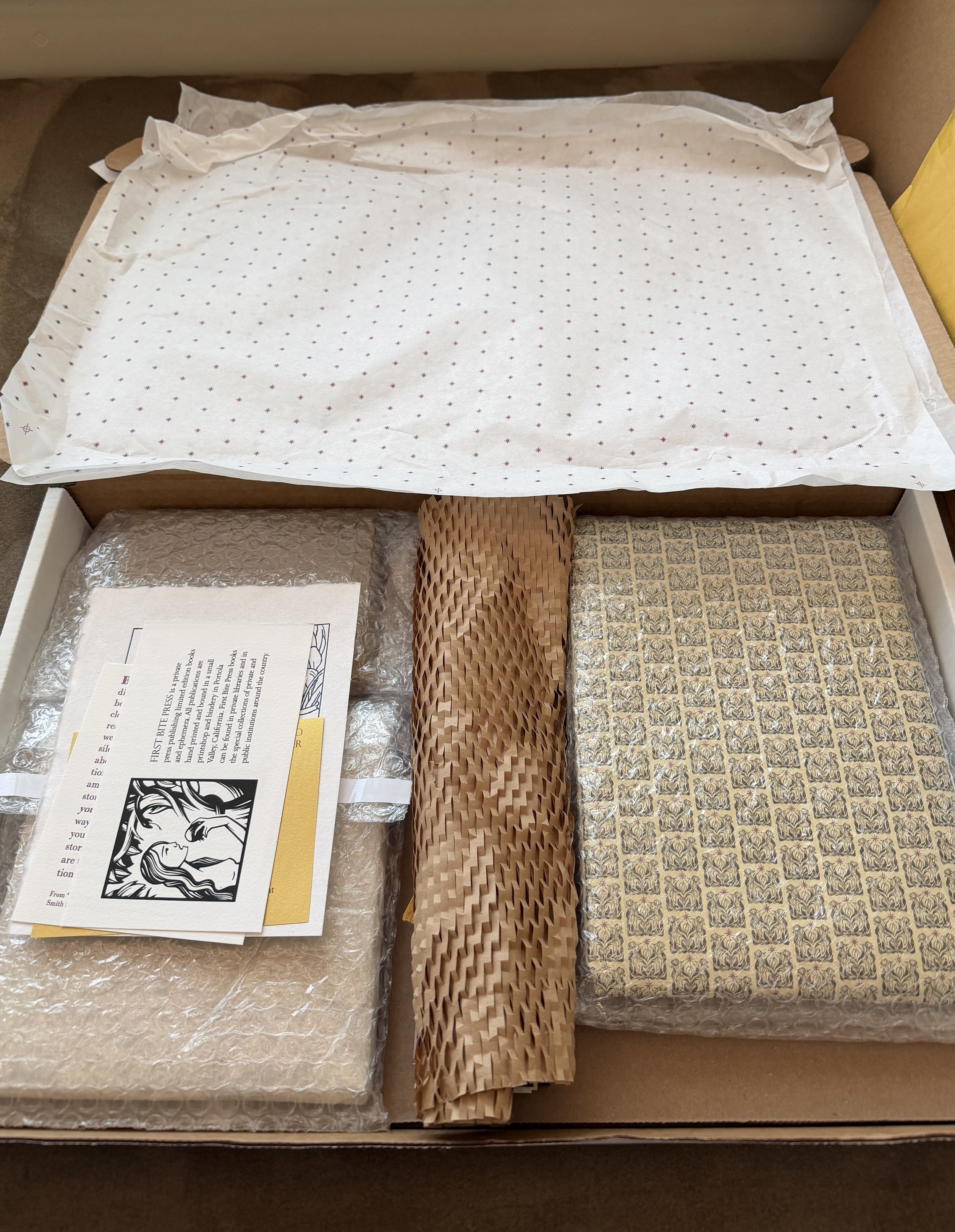
All of the orders have been shipped with the exception of a couple people whose shipping addresses we are waiting on. Hand written notes are included with each order.
I wanted to show a few pictures of the fulfillment process because after all, it is an important part of running a private press and a lot of thought goes into how to best wrap and protect the books and prints.
We wrapped the books in what we call "printer's waste." I wanted to explain what this is just in case anyone who purchased a book is interested in the process of bookmaking or just wants to know what they are holding.
What is Printer's Waste?
Printer's waste includes "make ready" (used to prepare for a print run), printer's errors and mistakes, including just aiming for better inking consistency across the printed page after adding more ink to the press.
Most books have text on both the front and back side of the pages you turn to read. You might take for granted that the lines of text, the page numbers, any chapter titles or headings, all fall in line throughout the book as you turn the pages.
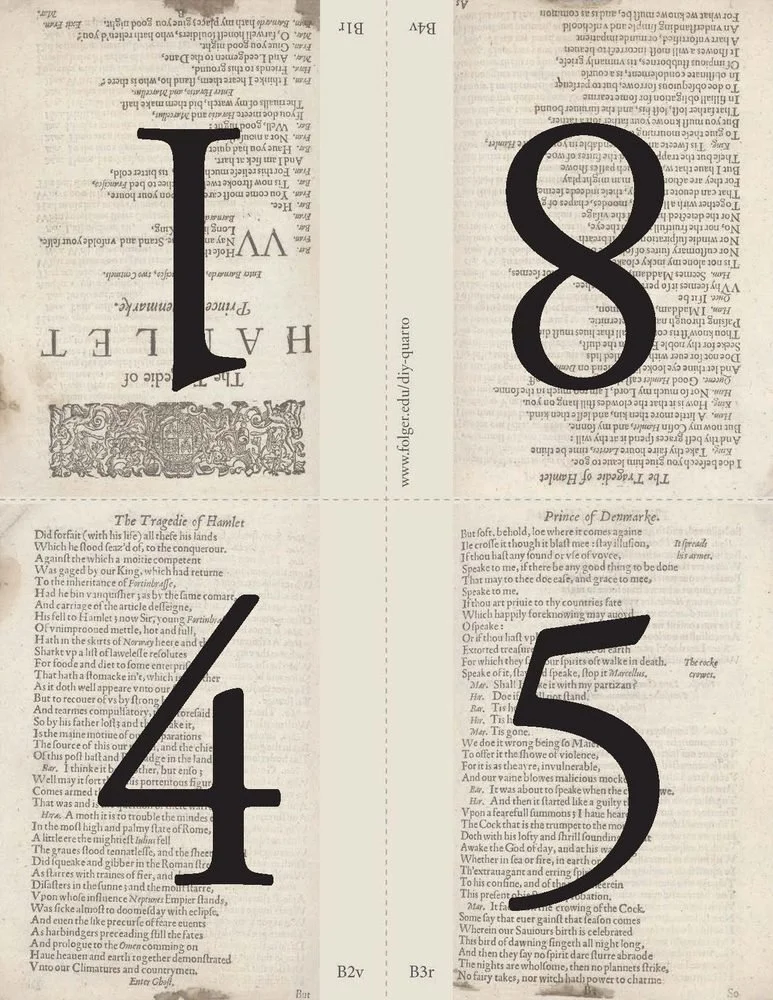
An image of 4up printing from the Folger Shakespeare Library. The Folger Shakespeare Library has a free DIY Quarto page and pdf if you'd like to learn more.
Books are not printed page by page on a press. They are printed 2up, 4up, 8up, etc. This means the printer takes a larger sheet and feeds it to the press or runs it through to print 4 pages (4up) on one side, and 4 on the other side. Each sheet will have 8 printed pages of text for the book (also called a Quarto). How many pages end up per master sheet depends on a few things: the size of the final book, the size of the press, the size of the paper selected, and the imposition of the book (how many folios per signature and signatures per book).
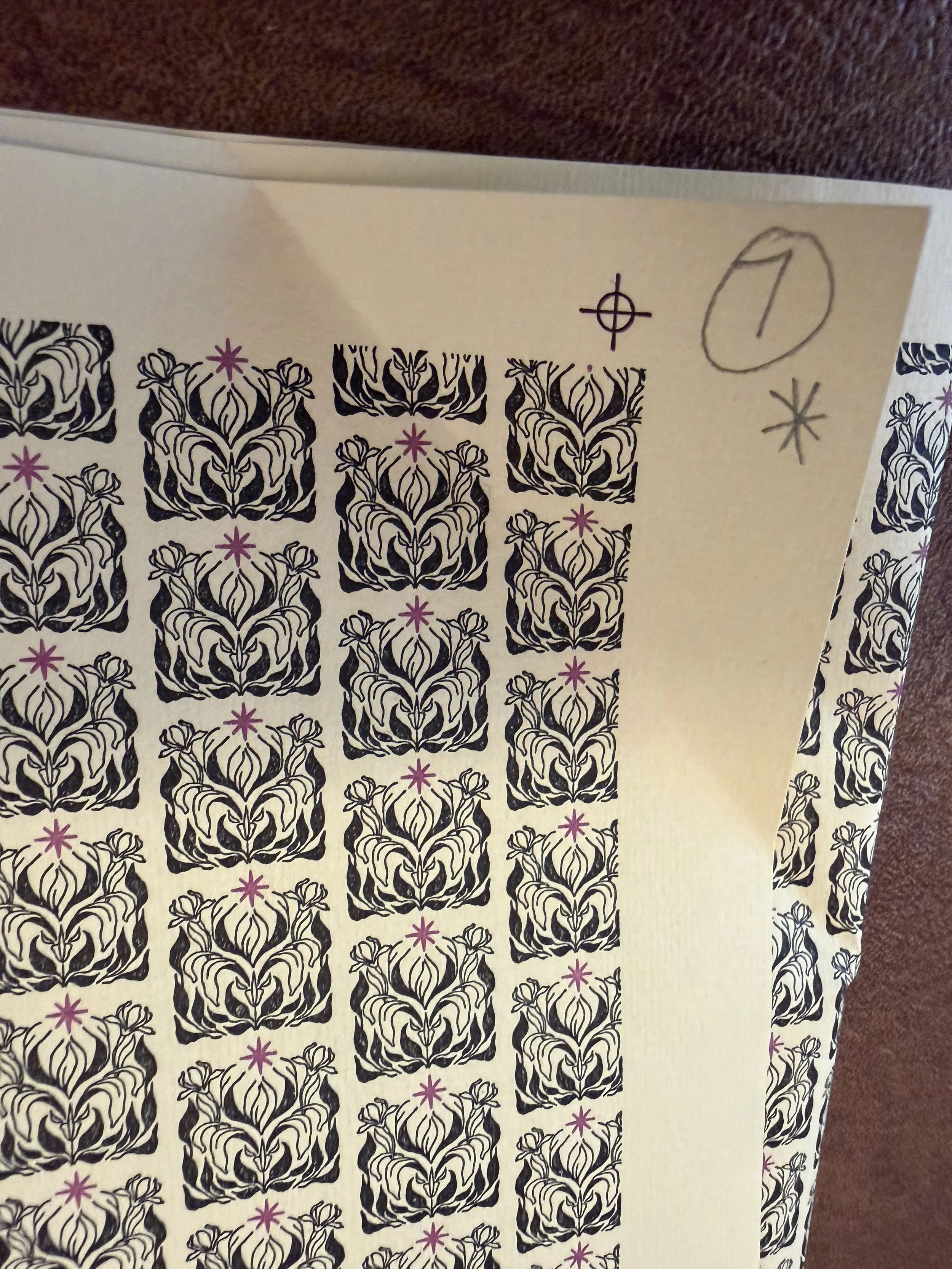
When the printer turns the printed sheet over to print the second side, the page needs to be "registered" so that the text and everything else on the pages all line up. Obviously, our presses won't flip and print on the long or short edge automatically like a digital printer. Printers use registration marks placed in the far corners of the sheet in order to make sure the second side is lined up properly. Once it's registered, the printer can continue with a run of however many of copies are needed for the book. Depending on the day and the mood of the printer and the press, registration for a new side can take a few passes. What's left over from those adjustments for registration is called "printer's waste."
Why Use Printer's Waste for Packing Limited Edition Books?
A few years ago I received a book for my personal library hand printed at the Nomad Press wrapped in a sheet handprinted at the Whittington Press for an edition of their Matrix journal. The Matrix was an amazing publication for printers and book collectors that is no longer in print. Holding a page from their Press was a treat to be able to see a part of the process of its publication.
During the printing of Babylon Songs, we naturally had sheets that were left over as a result of aiming to get better registration. This was the case with printing the two-color endsheets. The photo below shows that this was proof number 7 in the registration process for the two colors. You can see the registration mark where the two colors, black and purple should line up exactly on top of each other.
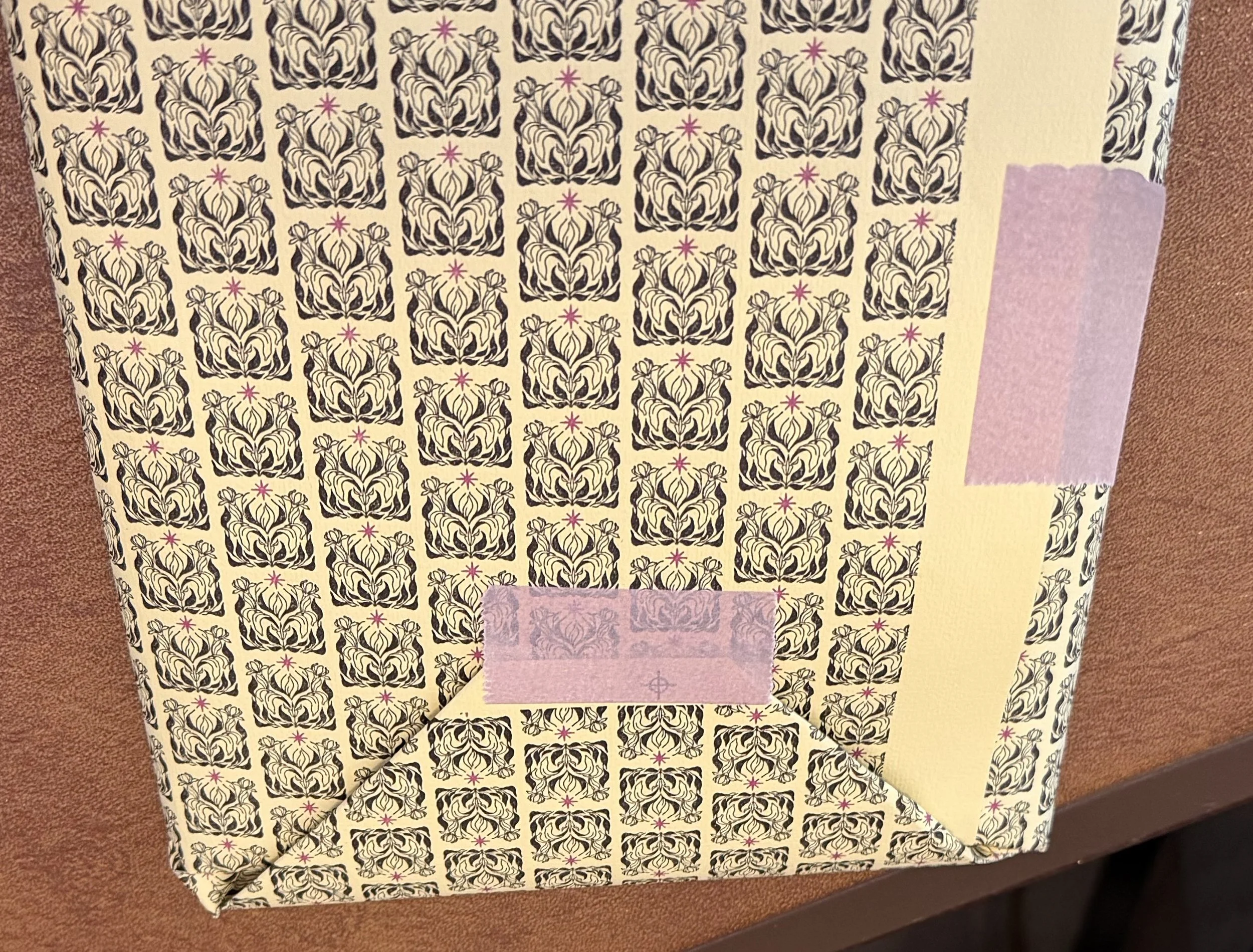
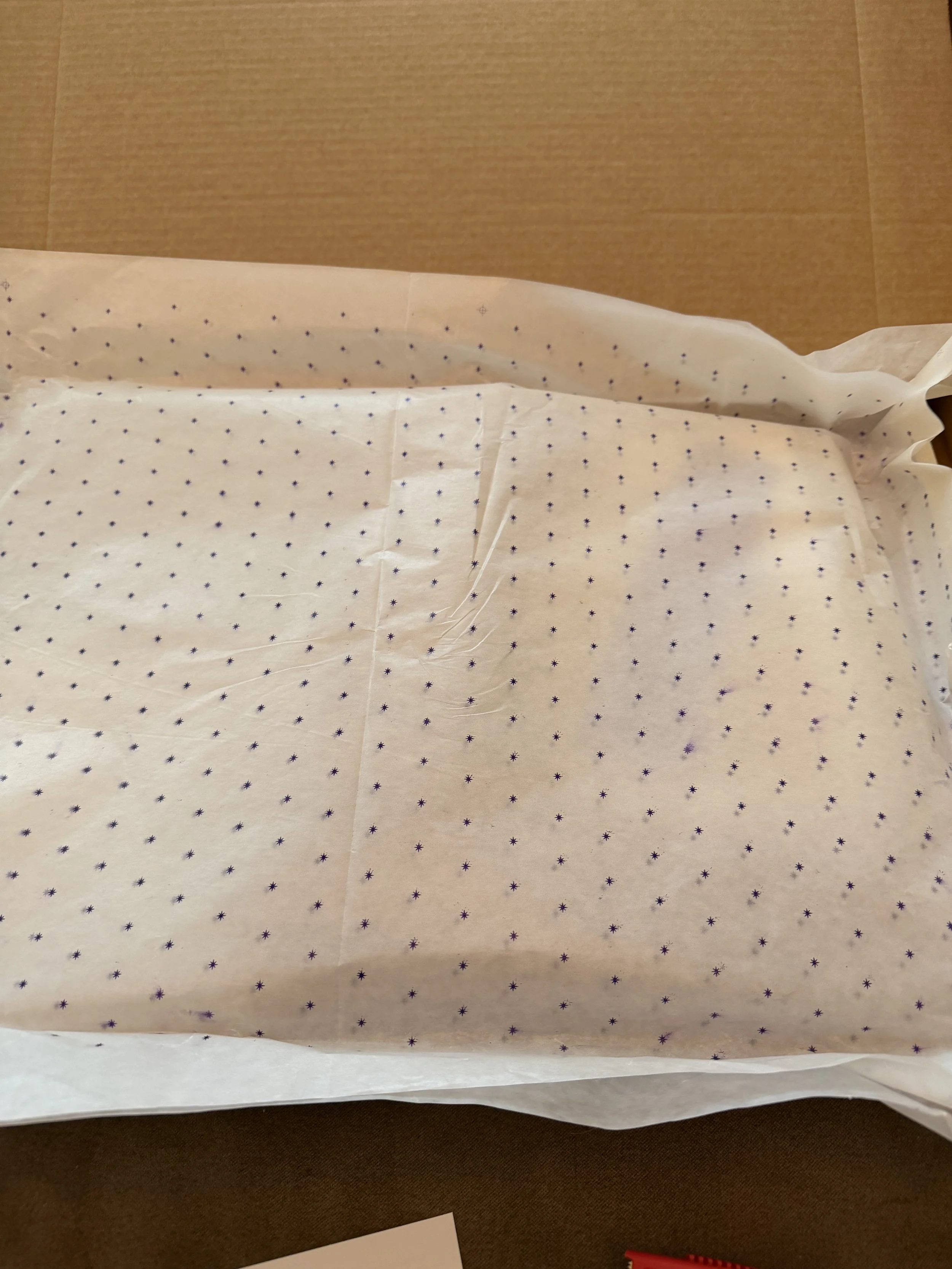
We also used transparent paper to help in the registration process in order to not waste as much of the printed papers. This will also show up in the packaging for orders.
If you have any questions about the printing process or about this limited edition book and its related prints, please ask! Individuals whose work you supported with this Kickstarter: Sharon Kallenberger, Christine Wolf, Colleen Harris, Sandie Levent, Fera Rose, and myself. Thanks again for your support of the Press.
Happy Reading,
Stephanie (Printer & Owner of First Bite Press)
